Jorja Smith grew up in Walsall, the daughter of a singer in the neo-soul group 2nd Naicha. She won a music scholarship to Aldridge School, played the oboe and trained as a classical singer, and at 15 a YouTube cover of Alex Clare’s “Too Close” got her a manager. By the time Lost & Found came out on 8 June 2018, she had sung on two tracks of Drake’s More Life, placed her own song “I Am” on Kendrick Lamar’s Black Panther: The Album, released “Let Me Down” with Stormzy and won the 2018 Brits Critics’ Choice award. She still had no record deal. The album came out on FAMM, her own label, distributed by The Orchard.
Her first release, “Blue Lights”, went up on SoundCloud in early 2016 and had passed 400,000 plays by late February. It grew out of her A-level Media coursework, on whether postcolonialism survives in grime, for which she analysed the video for Dizzee Rascal’s “Sirens”, in which, as she read it, Dizzee is hunted like a fox. While working on it she came across a beat by the producer Joice. The song interpolates “Sirens”, and it is built on elements of “Amour, émoi… et vous”, a 1981 piece by Guy Bonnet and Roland Romanelli. Its subject is the black boys she grew up with, who tensed up whenever the police appeared even when they had done nothing wrong; by her account, part of it is true and part of it she expanded. Stormzy and Skrillex backed it early, and it is track eight here.
None of these songs was written for an album. In 2017, she says, she told her manager she wanted to make one, and he handed her a list of everything she had written to choose from. The twelve span the ages of 16 to 20. The title track came first, and the name goes back to her first visit to Ladbroke Grove, when she felt small in a huge world but knew what she wanted to do. She dislikes re-recording, so some vocals are the originals: she sang “Where Did I Go?” at 17. When her publishers pushed for faster songs, she refused. The producers change from song to song: Charlie Perry, Cadenza, Michael Uzowuru with Jeff Kleinman and Jason Pounds, Joel Compass, Tom Misch and Ed Thomas among them. Maverick Sabre, who had been writing with her since her school days, co-wrote four songs, and Engine Earz mixed and mastered the lot. There are no guest features.
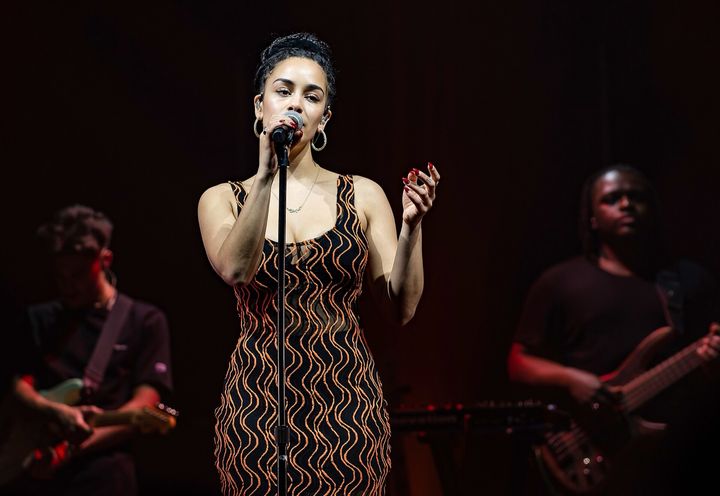
“Teenage Fantasy”, written at 16, is about a boy at school who did not like her back. “The One”, written with Compass, Thomas, Kito and Amanda Ghost, is about meeting the right person at the wrong time, and Nitin Sawhney arranged its strings. On “Lifeboats (Freestyle)” she raps about inequality and the refugee crisis over Misch’s production. Femi Koleoso of Ezra Collective plays drums on “Tomorrow”, which critics heard as gospel, and the closer, “Don’t Watch Me Cry”, is the only song she wrote alone, with Amané Suganami on piano.
Pitchfork’s Jackson Howard heard a more original sound than on her first EP, rooted in 1990s trip-hop, and set her beside Lauryn Hill. Tara Joshi in the Observer called it quietly remarkable, and Clash’s Lewis Lister a brilliant first draft rather than her best work. Kieran Yates was cooler in the Guardian, blaming thin production for songs that did not stick, NME’s Thomas Smith wished it strayed from its jazzy R&B template more often, and Max Pilley in Loud and Quiet called her a traditionalist next to Kali Uchis, SZA and Kelela. It reached No. 3 in the UK and No. 41 on the Billboard 200, made the 2018 Mercury Prize shortlist, and earned her a Best New Artist nomination at the 2019 Grammys.
There is plenty to admire. She sings with real control, the spare arrangements keep her voice at the centre, she wrote songs this composed as a teenager, and she held out against the faster, more upbeat songs her publishers wanted. But the record seldom shows what sets her apart from the crowd of young singers working the same slow, late-night R&B in 2018, a comparison she bristled at in interviews that year. Critics on both sides described an album mostly of gentle, unhurried love songs, and the two that look outward, “Blue Lights” and “Lifeboats”, are the ones they singled out. The song they praised most often was one she had put on SoundCloud two years before.
Watch and listen
Players only load when you press play. Their providers may set cookies.


