Benjamin Gibbard released his first solo album on Barsuk on October 16, 2012, after fifteen years in Death Cab for Cutie. The full first name was new: he told HuffPost he wanted something more formal than Ben. The songs were not new. By his own count they span eight years, three relationships, two cities and the move from drinking to not drinking, and he called the record “a side story, not a new chapter.” It arrived less than a year after he and Zooey Deschanel separated, and he spent much of the press cycle asking people not to hear it as a divorce album.
The songs had piled up because they didn’t suit the band. There was no place on a Death Cab record, he told Stereogum, for something that sounds like Big Star or Teenage Fanclub. While he was living in Los Angeles, between sessions for Codes and Keys, he booked time with Aaron Espinoza of Earlimart at the Ship, Espinoza’s studio in Eagle Rock, a song or two whenever he was off the road. After about a year they had an album. Gibbard played almost everything himself, starting from the drums and building up, and he credited Jay Farrar, his partner on One Fast Move or I’m Gone, with showing him how to record without being precious about it. Espinoza produced seven of the twelve tracks.
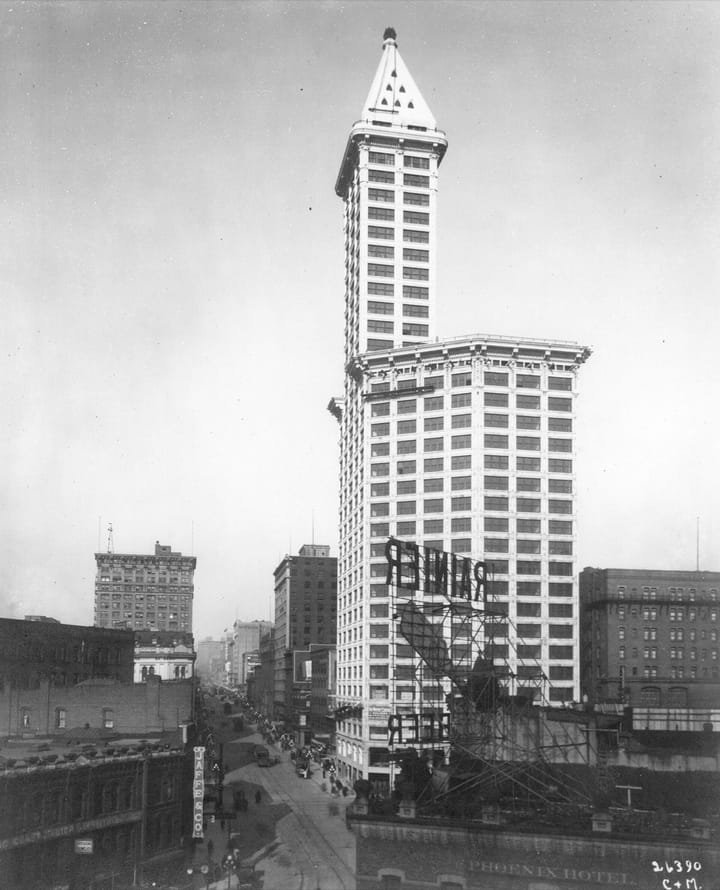
The two bookends were made without a studio. “Shepherd’s Bush Lullaby” is 50 seconds of a cappella, Gibbard stacking his own voice on a four-track app on his iPhone while walking around London in the rain. “I’m Building a Fire” was recorded live into GarageBand in Bixby Canyon, California. In between, “Teardrop Windows”, the first single, began as an attempt at a Big Star song and turned into a lament for Seattle’s Smith Tower, finished in 1914 as the jewel of the skyline and later overshadowed by the Space Needle and taller towers. Gibbard said it was about what we take for granted once something newer and flashier comes along. “Duncan, Where Have You Gone?” is an older song that he traces to Bill Fay and Teenage Fanclub and their descending chords.
The guests carry the most ambitious songs. “Bigger Than Love” tells both sides of F. Scott and Zelda Fitzgerald’s marriage, drawn from a book of their letters that Gibbard was obsessed with, and he wrote it with Aimee Mann in mind as the other voice. Espinoza, it turned out, had once tiled her bathroom. “Something’s Rattling (Cowpoke)” is built on the melody of Stan Jones’s cowboy song “Cowpoke”; Gibbard handed it to Trio Ellas, an all-female mariachi trio, and told them to play it like their own. Deschanel sings on it too. “Broken Yolk in Western Sky” is the oldest song here, a staple of his solo sets since 2004 that never found a place on Plans. He rewrote part of it and cut it in Brooklyn with Mark Spencer of Son Volt on bass and steel guitar and Jon Wurster of Superchunk on drums.
Metacritic averaged 70, and the album reached No. 34 on the Billboard 200. Critics agreed on the best songs, not on the whole. PopMatters named “Teardrop Windows”, “Broken Yolk” and the Mann duet as proof of how good it could have been, and called the a cappella opener and the mariachi song throwaways. Drowned in Sound found the opener the low point and said that away from Death Cab, Gibbard still sounds like Death Cab. American Songwriter picked “Bigger Than Love” and found the rest steady, with few standouts. The LA Times heard nothing as immediate as his band, while Rolling Stone heard a chilly breakup record, the reading Gibbard had warned against. The Current in Minnesota called it “a charming little record.”
Gibbard described the record accurately. It is a side story: a dozen songs that he admitted are tied together only by his voice and his writing. Where a song has an idea to push against, a skyscraper the city stopped looking at, the Fitzgeralds’ letters, a road song carried for eight years until the right players turned up, it is as sharp as anything he has written. Where it is a sketch, like the iPhone opener or the songs critics called slight, it stays one. That balance comes out a little better than even. In 2012 he doubted he would make another solo album for ten years, and fourteen years on, Former Lives is still his only solo album of original songs.
Watch and listen
Players only load when you press play. Their providers may set cookies.


